

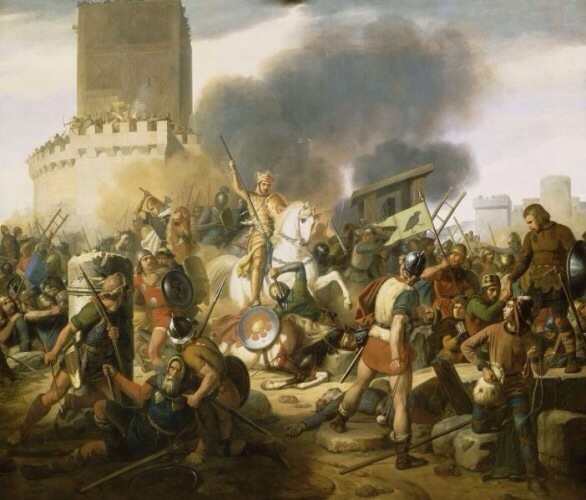
Introduction: In late July 885 a large Viking fleet gathered at the mouth of the River Seine and began to move upstream in the direction of Paris. After overcoming resistance at Rouen and Pontoise, in November the invaders stopped before the towers and bridges of Paris and, having been refused free passage by the inhabitants, dug in to lay siege to the town. Archbishop Fulk of Rheims, alarmed at the situation, sent an anxious letter across the Rhine to the king and emperor of the Franks Charles III (known today as ‘the Fat’) urging him to take action. The letter recalled the sterling job of defence which had been done by Charles’ predecessors in the west Frankish kingdom (he himself had assumed control in this part of the empire only in May) and pointed out the whole empire was in his custody.
Furthermore, Fulk ‘reminded him that the city of Paris, which defends the chief palace and entrance to the lands of Neustria and Burgundy, was surrounded by a barbarian siege, and would quickly fall unless it was relieved by the mercy of God; if it was captured, it would be at the cost of the suffering of the whole kingdom.
 Contemplations