
“The person who truly wishes to be healed is he who does not refuse treatment. This treatment consists of the pain and distress brought on by various misfortunes. He who refuses them does not realize what they accomplish in this world or what he will gain from them when he departs this life.”
~ St. Maximus the Confessor, Third Century on Love
Category: Uncategorized
The monastic rite according to St Dionysius the Areopagite
The so called Areopagitic texts have been read and quoted by many theologians and philosophers for over a thousand years. Scholars are still debating for their authenticity. However, they are a great source of information of the early Christian life.
They offer a valuable interpretation of the rite of monastic profession and tonsure. It is loosely organized in the same literary format as the preceding chapters of “Hierarchy”. But it begins with a discussion not of the monks but rather of the other lay people (who do not have a comparable ceremony), and it includes a summary of the entire human hierarchy. Furthermore, and far from the subject of monastic tonsure, it concludes by expanding on the discussion on how purification can apply to the angels.
Spanning the spectrum from catechumens and penitents through the communicants to the select group of monks, the lay orders are hard to designate by a singular collective noun. The author calls them all initiates, meaning both those who are already initiated and also those who are in the process of becoming initiated. The lay people are frequently subdivided into three groups: those being purified, the communicants, and the monks. The first group is liturgically identifiable at the dismissal (532A, 243). This group that is “yet being purified” is itself subdivided into three categories: the catechumens, the possessed, and the penitents.
The intermediate, contemplative rank consists of the communicants, who are entrusted to the priests. This identification of the laity, employs the second mystery of the Church which is illumination (photismos, φωτισμός). Accordingly, the most exalted order includes all purification (catharsis) and all contemplation in its elevation to the power of perfection. The order of monks is entrusted to the perfecting power of the hierarchs, who have completed or perfected the order’s understanding of the sacraments contemplated: “Thanks to their understanding, it has been uplifted into the most complete perfection proportionate to this order” (PG Migne volume 2, 532D, 245).
Because of this exalted status, the tradition has called them by more than one name; “therapeutae” indicates their servanthood, (also connotated as healing in koine) and “monks” indicates their singular way of life.
Although they are at the peak of the lay orders, they are completely subject to the clergy, as Letter 8 reminded the monk Demophilus. Their rite of profession is a secondary ceremony in the hierarchy, presided over not by a hierarch as in the clerical ordinations, but by a priest. (Yet this would seem to be inconsistent with the author’s principle that the monks’ perfection needs to come from the perfecting order, the hierarchs. The perfecting rite of monastic profession and tonsure would seem beyond the priest’s purifying and illuminating powers. This apparent inconsistency and others may stem from some differences between the author’s theoretical system and the practices of his actual historical context.)
Having in mind that the first coenobitic life starts with St Pachomius from 4th century we cannot place the priest in the desert but in a parish or paroikia (παροικία mentioned elsewhere in different chapters but yet to find exactly where). As for the rite that makes monks, the full passage reads:
“The priest stands before the divine altar and chants the invocation for a monk. The person being initiated stands behind the priests and does not kneel on either one or both knees. The divinely granted scriptures are not put on his head. He simply stands while the priest chants the secret invocations over him. When this is finished the priest approaches the initiate. First he asks him if he will not only renounce but even refuse to phantasize anything which could be a distraction to his way of life. He reminds him of the rules gov- erning a fully perfect life and openly asserts that he must surpass the median way of life. After the initiate has devoutly promised to do all this the priest makes the sign of the cross on him.He cuts his hair and invokes the three persons of the divine blessedness. He takes away all his clothes and gives him others. Then, together with all the other sacred men present at the ceremony he gives him the kiss [of peace] and confers on him the right to com- mune in the divine mysteries. (533B, 245-46)”
This rite is distinguished from the clerical ordinations in that the monk does not kneel on both knees, or on one knee, but stands. Continuing:
“We must now sum up. The holy sacraments bring about purification, illumination, and perfection. The deacons form the order which purifies. The priests constitute the order which gives illumination. And the hierarchs, living in conformity with God, make up the order which perfects. As for those who are being purified, so long as they are still at this stage of purification they do not partake of the sacred vision or communion. The sacred people is the contemplative order. The order of those made perfect is that of the monks who live a single-minded life.” (536D, 248).
OMIΛΙΑ στην ΚΥΡΙΑΚΗ της ΤΥΡΙΝΗΣ
OMIΛΙΑ στην ΚΥΡΙΑΚΗ της ΤΥΡΙΝΗΣ, Μτθ, στ΄, 14-21**, 17-03-2013 Του (+) π. Νικολάου Φαναριώτη* «Τη αυτή ημέρα ανάμνησιν ποιούμεθα της από του Παραδείσου της τρυφής εξορίας του πρωτόπλαστου Αδάμ», Συναξάριο του Τριωδίου. Εάν αυτό, δηλαδή την εξορία των προγόνων μας από τον Παράδεισο, την θεωρούμε αιτία χαράς…
ROMANITY, OR BARBARITY?

Richard Blake
Note: I don’t know where this came from originally. It was sent to Mr Blake by one of his fans. But its tries to put the difficult relations between the Greeks and West Europeans in a general context. There is some truth in the claim that the modern Greeks have only themselves to blame for what is happening to them. They lied to get into the Euro. The broke all its rules. They then elected a government of thugs that is still trying to blackmail more subsidies out of the Germans.
At the same time, there does seem to be a fundamental difference between the Modern Greeks and us, the descendants of the German and Slavic invaders of the Roman Empire. They remain foreign to us in ways that even post-Soviet countries like the Czech and Slovak Republics are not. Indeed, go to Prague or Bratislava, and you…
View original post 3,333 more words
DOWNLOADS: Αισχύλος – Οιδίπους Τύραννος…! #164 (PDF)

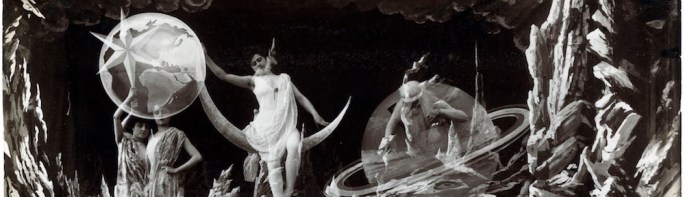
A Voyage to the Moon: Science Fiction in Ancient Greece
The Eternal Subordination of the Son, Social Trinitarianism, and Ectypal Theology

 Social Trinity?
Steve Holmes has a post worth reading, reflecting upon the recent book, One God in Three Persons: Unity of Essence, Distinction of Persons, Implications for Life. The book in question seeks to defend the ‘eternal submission of the Son to the Father,’ a controversial theological position that nonetheless plays an important role in many contemporary defences of complementarianism. The book presents an assortment of theological, exegetical, and historical arguments for the position, from a number of writers who advocate various—and occasionally opposing—forms of the doctrine.
Holmes is fairly scathing in his treatment of the book, not merely on account of his principled opposition to complementarianism, but also on account of his theological concerns as a leading Trinitarian scholar (I recommend that anyone interested in Holmes’ perspective on the current state of Trinitarian theology read his book The Quest for the Trinity: The Doctrine of God in…
View original post 3,590 more words
Saint Thalelaues the Hermit of Syria

February 27 is the Commemoration Saint Thalelaues the Hermit of Syria
“Saint Thalelaeus lived during the fifth century. He was a native of Cilicia (Asia Minor), became a monk at the monastery of St Sava the Sanctified, and was ordained presbyter there. Later on, he moved to Syria, not far from the city of Habala, he found a dilapidated pagan temple surrounded by graves, and he settled there in a tent. This place had a rough reputation, since the unclean spirits residing there frightened travellers and caused them much harm.
Here the monk lived, praying day and night in total solitude. The demons often assailed the saint, trying to terrify him with sights and sounds. But by the power of God the saint ultimately gained victory over the power of the Enemy, after which he was troubled no more. He then intensified his efforts even more: he built a hut…
View original post 273 more words
St Baradates, Syrian Hermit
February 22 is the commemoration of St Baradates (Baradatus).
St Baradates (died circa 460) was a hermit who lived in the Diocese of Cyrrhus in Syria, and whose bishop, Theodoret, called him “the admirable Baradates.” Baradates lived in a tiny hut, too small for him to stand upright, and he wore a leather garment that exposed only his mouth and nose. He was said to have been very learned, particularly in theology. Emperor Leo wrote him, asking his advice regarding the Council of Chalcedon.
http://en.wikipedia.org/wiki/Baradates
Saint Baradates the Syrian began to live as a desert-dweller in a hut near Antioch. He then built a stone cell upon a hill, so cramped and low that the ascetic could stand in it only in a stooped position. It had neither window nor door, and the wind, rain and cold came in through the cracks, and in summer he was not protected from…
View original post 1,098 more words
 Contemplations